
Computer-Guided Dental Implants — Millimeter-Perfect Placement
Freehand implant placement relies entirely on the surgeon's visual judgment mid-procedure. Computer-guided surgery replaces that judgment with a digital plan, executed the same way every time. It's how we place implants with fractions-of-a-millimeter accuracy — consistently, on the first try.
The difference between "close enough" and exact
An implant placed one millimeter off in the wrong direction can push against a nerve, perforate a sinus, or sit in bone too thin to support it. None of these are apparent to the naked eye during surgery. They show up in the 3D scan you didn't take.
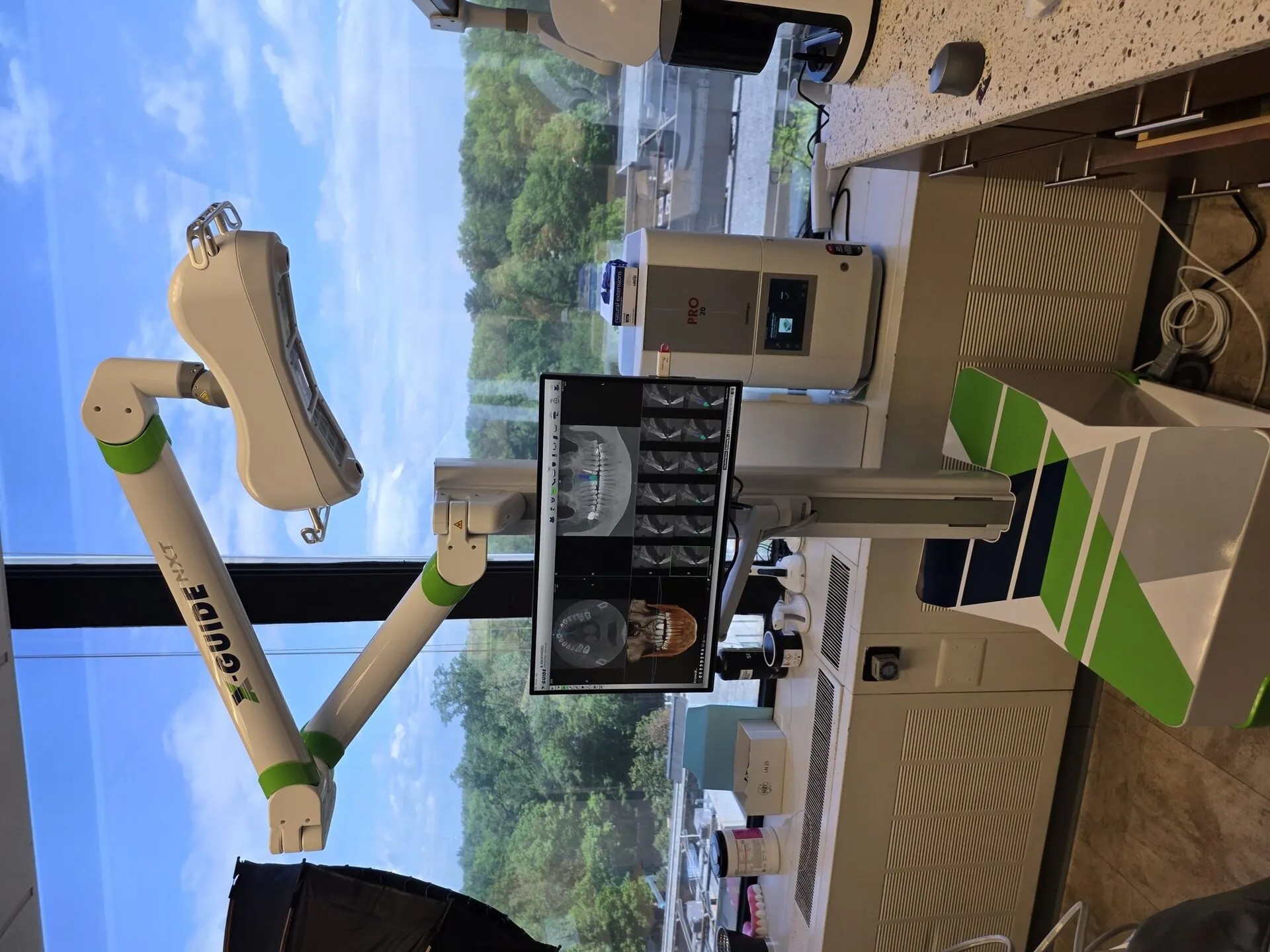
Computer-guided surgery means the implant goes exactly where it was planned — not where it looked right in the moment. We use two guidance methods depending on the case: XNav dynamic navigation for same-day or complex cases, and static 3D-printed surgical guides for straightforward cases.
Every implant placed at Radiant Dental Care is digitally planned. There is no freehand placement here. Not because the technique is bad, but because precision, when available, should not be optional.
Static vs. dynamic navigation
Both approaches rely on the same 3D plan. The difference is how the plan gets executed in the mouth.
Static surgical guide
A 3D-printed plastic guide that slips over your teeth and physically restricts the drill to the planned angle and depth. Best for straightforward, planned-in-advance cases.
XNav dynamic navigation
Real-time GPS-style tracking of the drill against your 3D scan. A monitor shows the drill's exact position during surgery. Best for complex cases, same-day cases, or when case changes on the fly.
Which we pick
We select based on case complexity, bone quality, whether same-day restoration is planned, and aesthetic demands. We're one of the few Chevy Chase practices with both in-house.
From scan to surgery
Digital planning happens before the first incision. That front-loaded effort is what makes guided surgery fast, predictable, and safer than freehand.
3D CBCT scan
In our office, a single 20-second scan captures your entire jaw in 3D — bone density, nerves, sinuses, existing teeth.
Intraoral scan + merge
A digital scan of your teeth is aligned with the CBCT to create a full virtual patient model. Dr. Siddiqui plans implant positions in this combined view.
Surgical plan review
We walk through the plan with you — why each implant is where it is, what the final restoration will look like, what risks exist. Plan is finalized.
Guide fabrication or XNav setup
If static: surgical guide is 3D-printed in-house or sent to lab. If dynamic: XNav registration is done chairside at the surgery appointment.
Guided surgery
Implant is placed following the digital plan to within fractions of a millimeter. Most cases take 30–90 minutes depending on number of implants.
Guided surgery is included
We don't charge extra for guided placement — it's our standard of care. Every implant placed at Radiant Dental Care is digitally planned and guided, period.
What it costs
Frequently asked
Related services
Computer-Guided Implants in Chevy Chase, MD
Computer-guided implant surgery in Chevy Chase using CBCT imaging and XNav dynamic navigation for precise planning and placement.
- Who it's for
- For implant patients who want technology-guided planning, especially when anatomy, spacing, or esthetics make precision important.
- Technology used
- CBCT 3D imaging, XNav dynamic surgical navigation, digital planning, and surgical guide workflows when indicated.
- Next step
- Ask Dr. Siddiqui whether guided or navigated implant placement is appropriate for your case.
Your next smile starts with a consultation
Dr. Jay Siddiqui personally evaluates every case. No associates, no rotating doctors. Book online or call to schedule — evenings and Saturdays available.